Last Updated Aug 16, 2026
Origins of Triage: Introducing Mirae for GI Practitioners

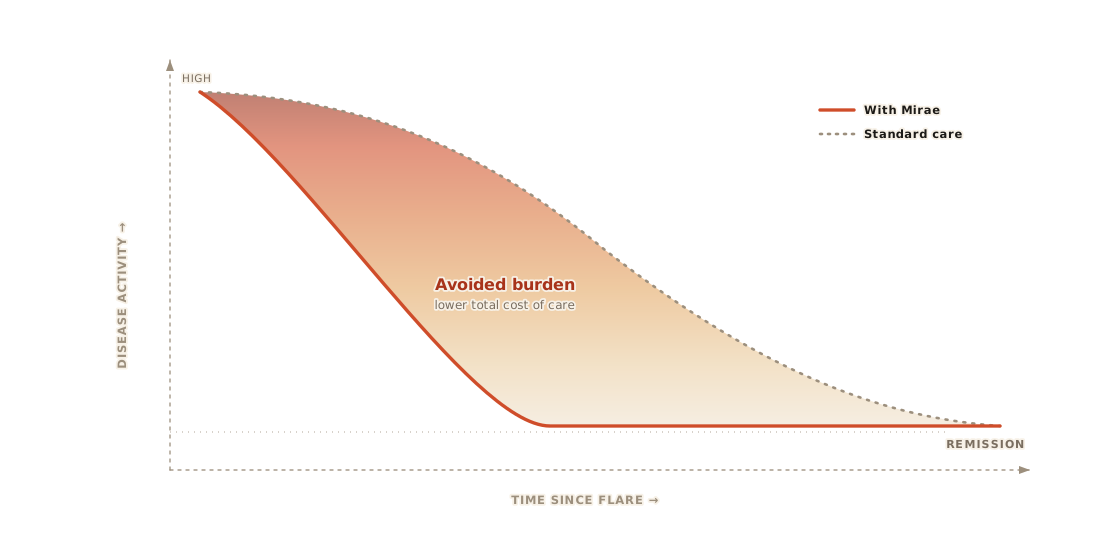
Since going live a few weeks ago, the general assumption has been that Mirae is a product just for patients. Earning the trust of patients is central to what we are building at Mirae. But our vision is to work with every stakeholder in healthcare and life sciences to advance cures for autoimmune disease, and you cannot do that without also working directly with clinical stakeholders. We are building clinical tools that give every GI clinician the ability to treat patients with IBD more effectively and into remission faster. To the outside world, you could use the more fanciful term of enabling precision medicine. But to a clinician, what Mirae is building is perhaps more effective triage.
The surgeon who invented triage
Dominique-Jean Larrey is not a household name, which is a shame, because almost every medical practice on earth runs on ideas he pioneered. Larrey was orphaned at the age of 13 and raised by his uncle, a surgeon in Toulouse. He rose to the rank of chief surgeon of Napoleon’s Imperial Guard, developing the concept of medical triage, treating injured soldiers by rescuing them during battle and by the severity of injury rather than rank. Amazingly, he was wounded himself and captured at the Battle of Waterloo by the Prussian army and sentenced to death, only to be spared at the last minute by a German physician who recognized him from lectures he had given in Berlin. (Clinicians: consider this history’s strongest argument for keeping up with your CME credit.)
Larrey did not coin the term “triage” himself. That word was borrowed later from French commerce, where it meant sorting coffee beans and wool by grade. But the concept was his: when demand for care exceeds capacity, the most important clinical act is deciding who needs you first and how to deliver care most efficiently.
Why triage still describes GI practice today
There are no battlefields, but hundreds of years later, the concept is still in effect within the GI practice of today. Demand for GI care is far outstripping supply. Practices are facing more caseload, and much more administrative burden. The average wait time for an appointment is 3 months and you can imagine patients in rural communities face significantly greater barriers to access care. For patients with IBD, the burden to patients and practice is exponentially greater. The administrative burden of prior authorizations or appeals for biologic therapy, understanding how patients will obtain and adhere to a prescribed therapy and keeping up with the growing amount of research on biologic therapies for IBD patients adds up to hours per day for a practice. Then, there is the idea that once a patient walks out of an office, there is no mechanism for knowing how they are faring on their therapy and what, if any, intervention is needed.
What we are building for your IBD panel
That’s where Mirae comes in.
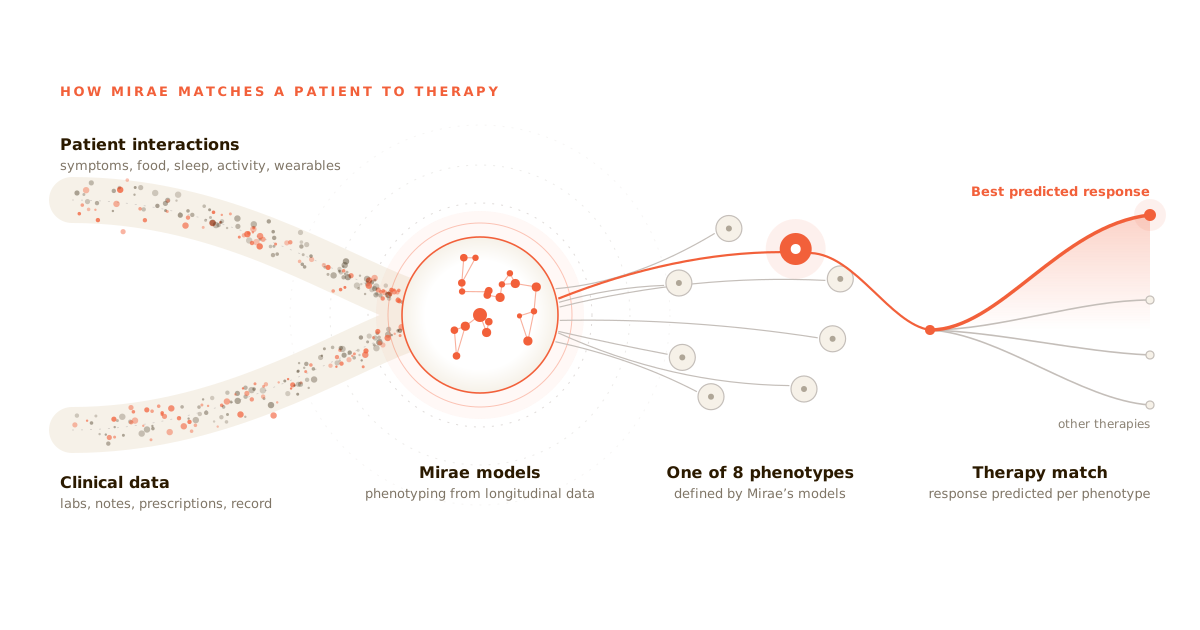
Imagine a clinical AI that knows your IBD panel specifically. Risk triage that surfaces which patients are trending toward trouble, drawing on signals between visits rather than waiting for the next scheduled appointment. Decision support grounded in your patient’s actual history, labs, and therapy line. Previsit preparation for patients that enables a true conversation with your patients in the limited time you have rather than a chart review.
Larrey’s concepts hundreds of years ago made sure the right patient got to the surgeon in time. That’s what we’re building for IBD care. The bottleneck we are solving for now is how do we empower every GI practice to efficiently deliver world-class care for their IBD panel: knowing who needs what, and when. We think you, the clinician, are doing the best you can with the resources you have to treat a growing, more complex panel of patients: the process of triage pioneered by Larrey. We think you deserve the tools we’ve built to make that process better.
If you run a GI practice, we’d love to talk. Visit the For Clinicians page, or reach out directly.
Anuj Patel
Read More Posts

Let Mirae guide the way forward
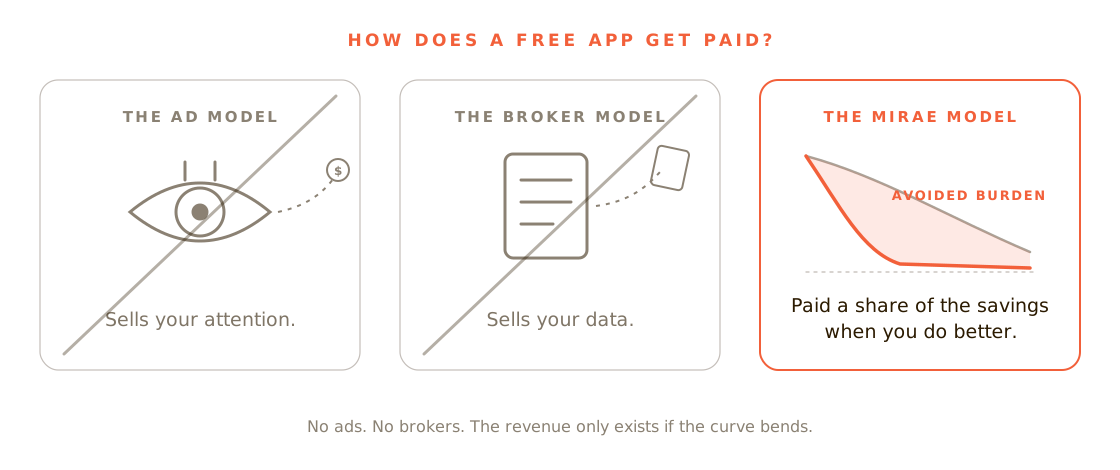
Bring your symptoms, food, medications, lab results, and questions together so you can understand what is changing and prepare for your next care conversation. Mirae is free. There is no paid plan, no trial period, and no card needed to start using the app.